
GDC 2026 Recap: How AI Workflows Are Transforming UA Creative Production for Game Studios

GDC 2026 Recap: How AI Workflows Are Transforming UA Creative Production for Game Studios
GDC 2026 felt… different. Not because of flashy announcements or breakthrough demos. But because of what quietly disappeared from every serious conversation:
No one is questioning AI adoption anymore. That debate is over. Across nearly every meeting, panel, and side conversation, one theme kept coming up:
Creative production for UA and LiveOps is entering an automation era.
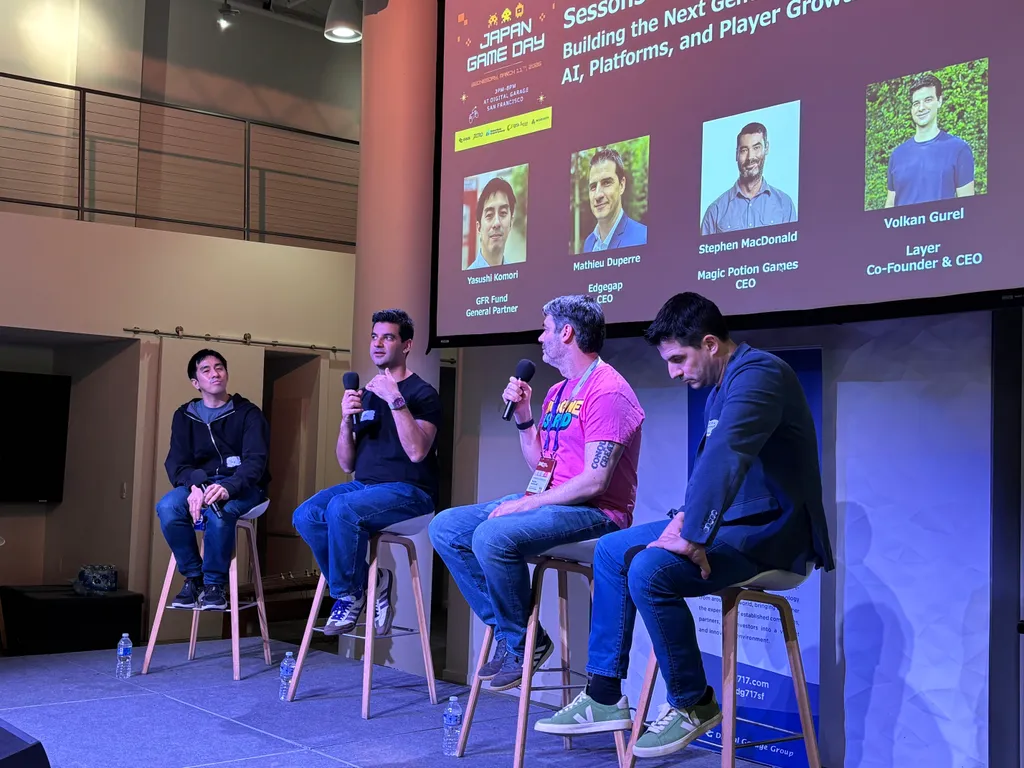
Photo taken at the AI Panel from GFR Fund Event.
From “Should We Use AI?” to “How Do We Operationalize It?”
Just 1–2 years ago, studios were still asking:
- Is AI production quality good enough?
- Is it safe?
- Will it really replace manual & repetitive work?
At GDC 2026, those questions felt outdated.
Today, the real questions are:
- How do we integrate AI into production pipelines?
- How do we scale output without losing IP consistency?
- How do we move faster without creating chaos?
Experimenting with AI is easy. Building scalable, reliable creative systems is not.
At Layer, we did invest our time being the Enterprise solution for top game studios, meeting their needs from IP safety, data privacy, compliance, workspace management early on, removing the barrier to adoption of AI for largest game studios. This makes us extremely excited because they are completely unblocked to build the systems they need and fully capitalize on the latest AI capabilities.
Why UA Creative Production Is Ground Zero
The pressure on UA and LiveOps teams has never been higher.
Teams are expected to produce:
- Short-form video ads
- Vertical creatives
- Playable ads
- App store previews
- LiveOps content
- Social media trailers
Across more channels, faster than ever.
A character showcase workflow generated on Layer, you can try it on Layer now under featured workflows. You can simply duplicate, modify and save it to your workspace and share with the rest of your team.
At the same time:
- Platforms are becoming more opaque
- Distribution is less predictable
- Creative is the primary lever for performance
Performance now depends on:
- CTR (click-through rate)
- CPI (cost per install)
- ROAS (return on ad spend)
- Testing velocity
The challenge is clear:
Traditional creative pipelines were never built for this level of scale.
Matej Lancaric, our partner in crime in UA, approves, Layer is becoming the killer app for UA creatives. We recommend following his work to get educated about the latest and greatest with AI Creative Production.
The New Creative Pipeline: AI for Ideation → Testing → Scale
A new creative production model is emerging.
1. AI-powered ideation
Generate dozens or hundreds of creative concepts quickly:
- Video hooks
- Gameplay clips
- LiveOps promos
- Creative variations
2. Rapid testing
Measure early performance using:
- CTR
- CPI
- Engagement signals
3. Scaling winners
Expand what works across:
- Formats
- Channels
- Campaigns
Creative intelligence platforms like Segwise take this scaling approach further by combining analytics with AI-powered creative generation. The platform automatically tags every creative element (hooks, CTAs, characters, visual styles, audio components) using multimodal AI, identifies which creative variables drive the best performance, then generates new variations based on those winning creative patterns. Instead of scaling entire ads, studios can scale the specific elements that actually drive CPI and ROAS. This creates a self-reinforcing loop: analyze performance, identify what works, generate variations of winning patterns, test, repeat. Layer handles artist-driven creative production, while platforms like Segwise handle data-driven creative optimization at scale.
This flips the traditional model.
Creative is validated before heavy production investment begins.
Examples of AIGC Interview format available on Layer as a Workflow. You can try this workflow now on Layer. Want to adapt to your own gameplay? make a copy and publish and it's available to you and your team.
From Prompts to Workflows to Systems
Most teams today are still:
- Prompting
- Experimenting
- Stitching tools together
But the real leverage is shifting toward:
Structured workflows and creative systems
These systems enable:
- Consistent outputs
- Repeatable production
- IP-safe generation
- Scalable collaboration
This is where the industry is heading and where many teams are still catching up.
Live from GDC: Building AI Trust in Entertainment
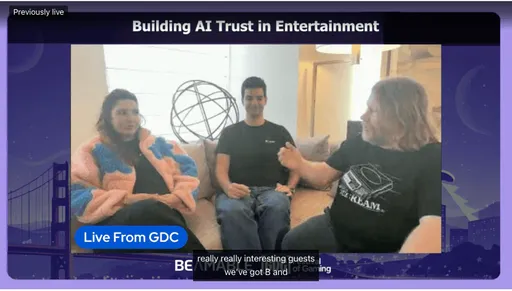
We kicked off GDC with a live session at the St. Regis with Jon Radoff (Beamable founder, acquired by Skillz Platform recently).
The core question:
How do you adopt AI while preserving creative control and IP integrity?
The answer is increasingly clear:
AI requires structure. Studios need:
- Governed workflows
- Consistent art direction
- Integration with existing pipelines
- Production reliability
Without structure: AI creates chaos, not scale.
Agentic Workflows: The Next Evolution
One of the biggest themes across GDC:
AI is moving from assistant → operator
Instead of supporting workflows, AI is beginning to run parts of them.
Example:
A UA team or Live Ops team defines a goal:
“Generate 30 new video ads for our next UA Campaign or Live Ops Event”
The system:
- References IP and art style
- Generates variations
- Prepares assets for testing
All while keeping creative direction human-led.
This is the foundation of agent-driven creative systems.
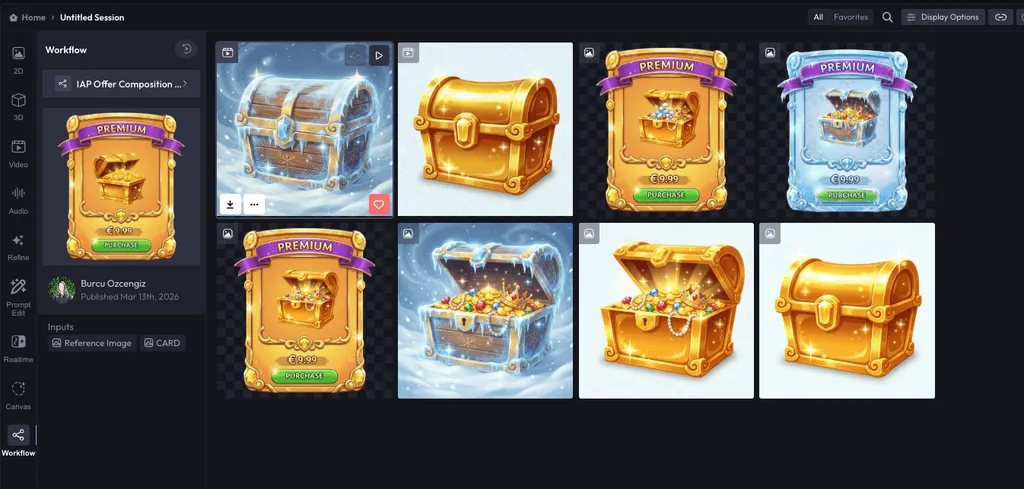
IAP offer template workflow on Layer, you can try now on Layer.
From 2D Assets to Scaled Video Production
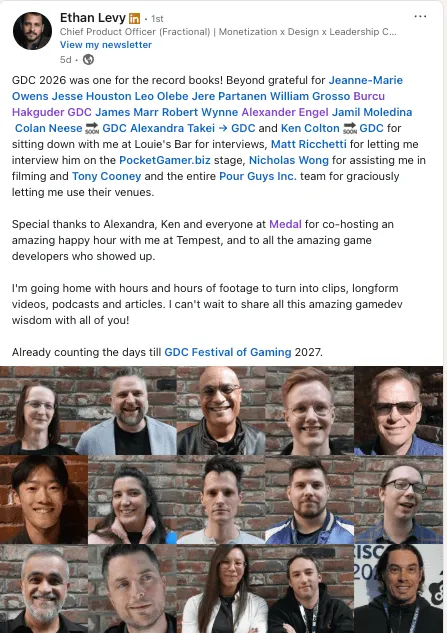
We also joined Ethan Levy at Louie’s Bar for a series of GDC interviewsalongside a group of top operators, founders, and creatives across the gaming ecosystem.
The sessions brought together voices from across product, monetization, and studio leadership, capturing a wide range of perspectives on where the industry is heading.
The focus of the conversations centered on:
- The rapid evolution of AI in game development and marketing
- How studios are adapting their production and monetization strategies
- The shift toward faster iteration, experimentation, and leaner teams
The industry is moving quickly, and the next wave of innovation will come from teams that can combine speed, systems, and creative insight.
Not long ago -> AI = 2D static assets
Today -> AI = production-ready video pipelines at scale
This is NOT incremental. It’s exponential.
A Real Example: Production Constraints Are Disappearing
Our VP of Product, Alex Engel, mesmerized the teams we met, with Foster, the gachapon game everyone has been talking about.
- He built it solo, a full gachapon game, this is not a hyper casual game, it has a relatively complex asset pipeline in image standards
- Created all assets and animations
- Produced multiple videos
In 3 weeks. For under $300. All using Claude & Layer API/ MCP together. Yes you heard it right, soon Layer MCP is live, meeting studios who have been asking for it for a long time.
Foster is 100% built end-to-end using Layer + AI workflows, by Alex Engel, co-founder of Lovelace Studio, now VP of Product at Layer.
This isn’t just efficiency. It’s a collapse of production constraints.
The Funding Shift: Capital Is Moving Away from Content
Beyond product conversations, another shift stood out: Capital is repositioning.
Investment in content is declining
Investors pointed to:
- Weak returns since 2018
- High production costs
- Unpredictable outcomes
Funding new games is getting harder.
Capital is moving toward infrastructure and UA
Instead, capital is flowing into:
- AI tooling
- Marketing / UA financing
- Project-based funding
In many ways, VCs are reinventing publishing.
Studios want AI tools, not AI games
Executives are not prioritizing AI-generated games.
They want:
- Faster iteration
- Lower cost
- Reduced risk
AI is being adopted as a system optimization layer, not a product replacement.
Meanwhile: Builders Are Moving Faster Than Ever
While capital becomes more disciplined:
Builders are accelerating.
We saw:
- Solo developers shipping games in weeks
- Small teams experimenting rapidly
- Increased creative freedom
It felt like a return to earlier eras of game development.
The Next Breakout Studio Is Already Emerging
The Innovator’s Dilemma is visible.
Large studios optimize.
Small teams reinvent.
Somewhere right now:
A small team is building fast, low-cost games.
One of them will break out.
Conversations Across the Industry
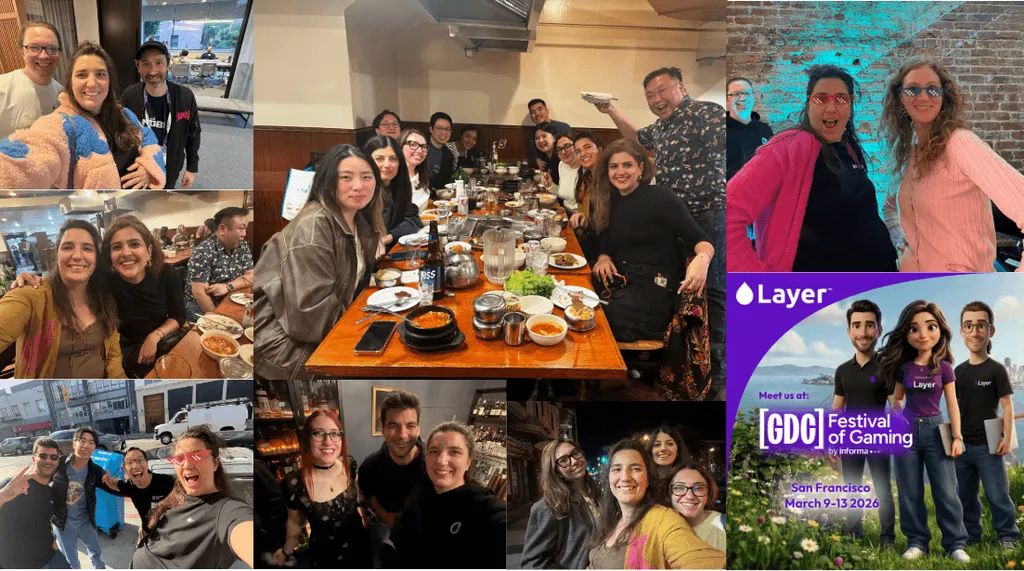
We met with teams across the ecosystem, Supercell, Tripledot, Miniclip, Wildlife, Thatgamecompany, Xsolla, SensorTower and many others.
Across all conversations, one theme was consistent:
Studios want systems, not tools.
Building the Creative System of Record
The creative system of record. A platform that manages:
- Creative workflows
- Model orchestration
- Asset governance
- IP safety
- Collaboration
This is what Layer MCP is designed to enable.
What’s Next for Layer
Taking all of our foundation further. We’re doubling down on:
- Agentic & insights drive workflows
- Controllable, IP Consistent UA video workflow automation
- Style consistent playable ad generation
- Hyper personalized LiveOps workflows
Final Thoughts: AI Is Infrastructure
GDC 2026 made one thing clear:
AI is no longer a feature. It’s infrastructure.
And infrastructure doesn’t differentiate you.
How you build on top of it does.
The studios that win will be the ones who:
- Build systems early
- Operationalize AI
- Move faster than everyone else
Try Layer!
If your team is thinking about scaling UA creatives or LiveOps production, check out our features or contact sales:
👉 Start experimenting with AI workflows: https://layer.ai