PGC London 2026 Recap: The Year UA Could Become Good, Fast, and Cheap

PGC London 2026: The Year UA Could Become Good, Fast, and Cheap
Pocket Gamer Connects London is always intense. This year was no different.
Over two packed days, the Layer team met with studios, platforms, and partners back-to-back, often switching conversations every 30 minutes. From largest mobile game companies in the world, to indie teams, one theme came up again and again:
Studios don’t lack ideas. They lack time to turn them into scalable creative.
Day 1: Production Conversations at Scale
Day one was a grind in the best way.
We spoke with teams from top publishers and game studios, alongside many AI and platform companies exploring where creative automation fits into their stack.
Alex Engel took the stage at 10am, followed by Volkan on a panel at 12:30pm. Feedback on both sessions was overwhelmingly positive, and multiple conversations continued straight after with studios asking for trials and integration discussions.
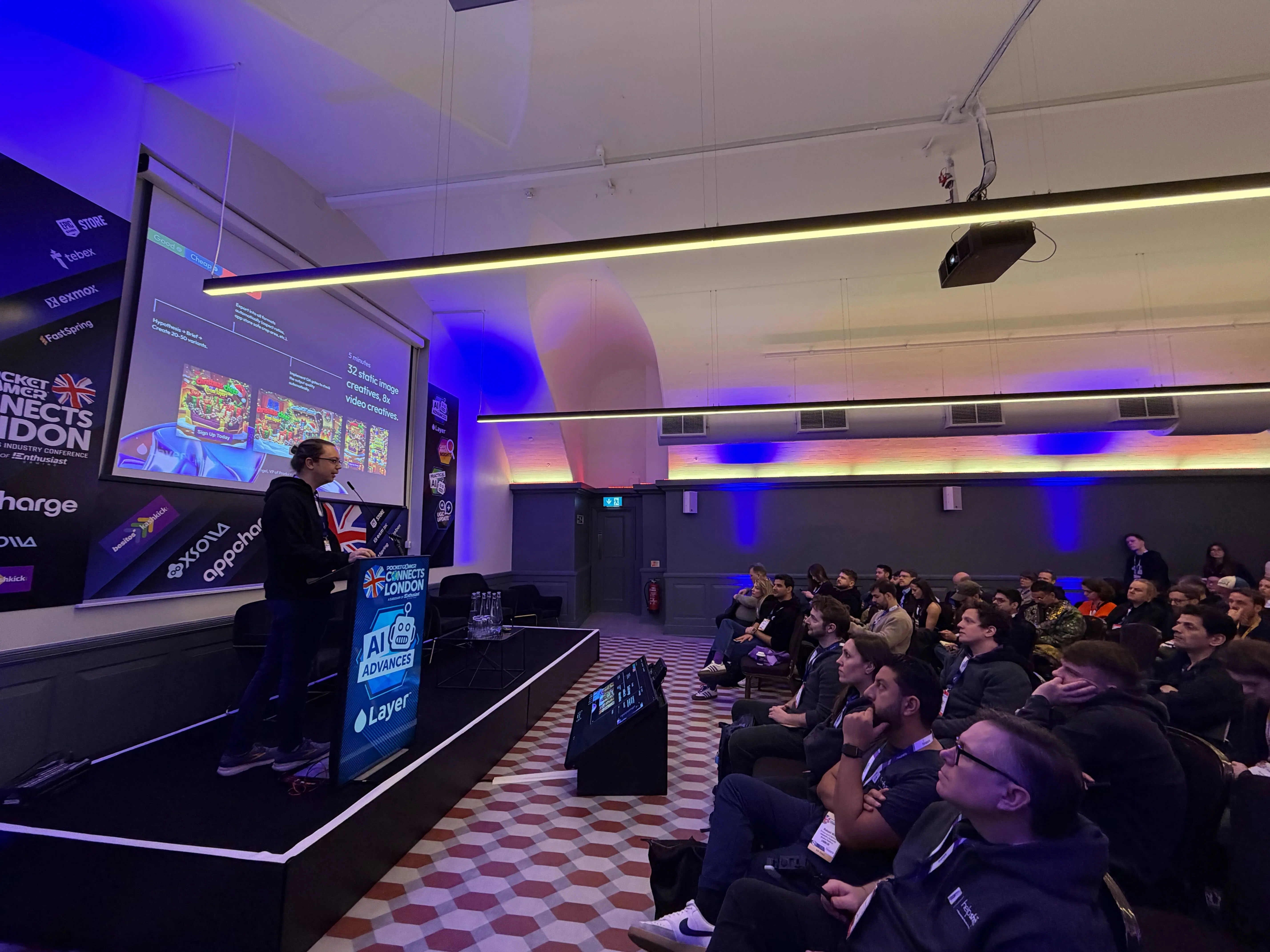
Alex Engel on stage at PGC London. Alex earlier gave a quickfire Q&A ahead of his talk at PGC London, read the full article here.
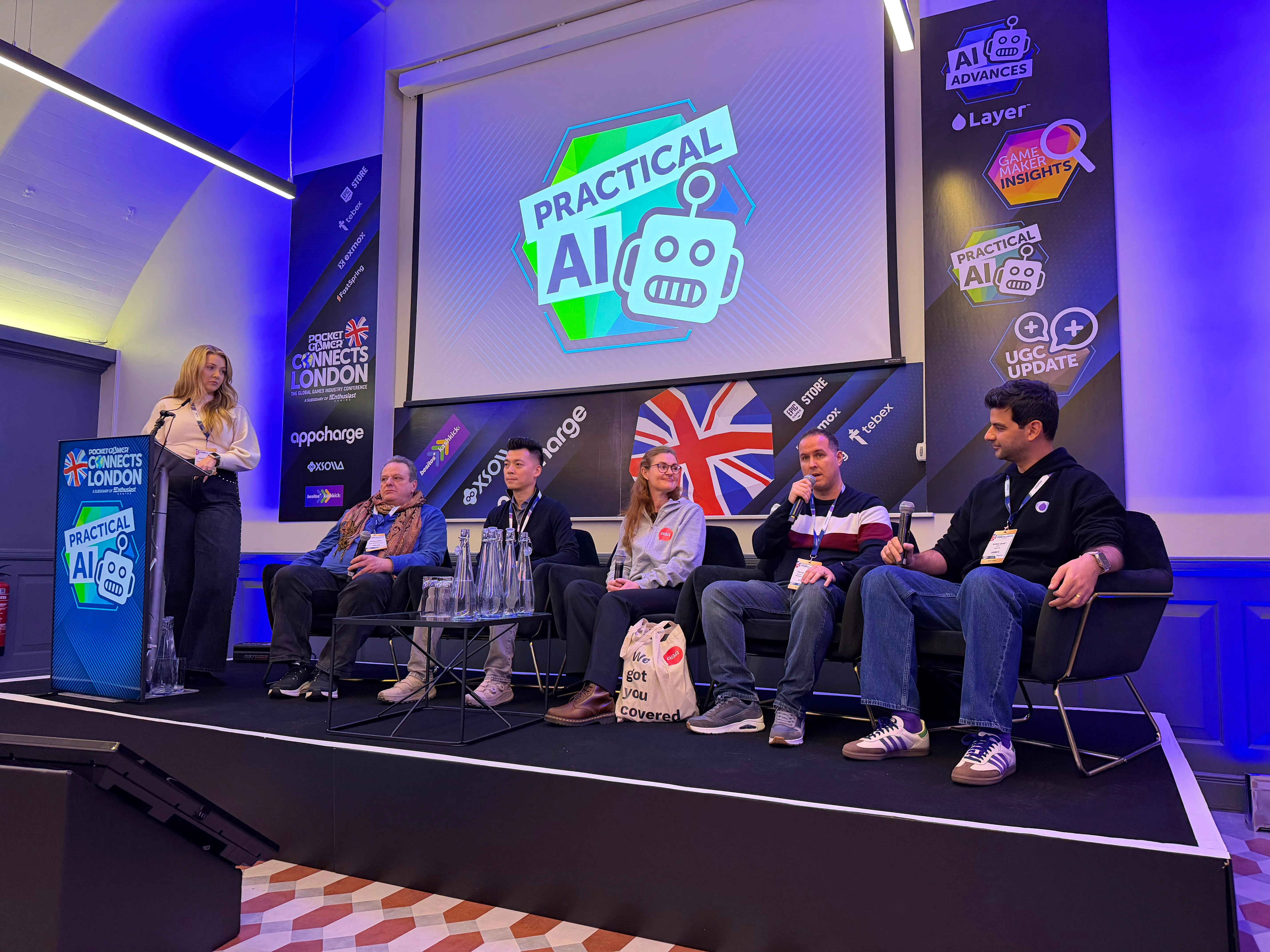
Panel discussion with Volkan Gurel (on the right), Layer CEO during Practical AI Session at Pocket Gamer London.
What stood out early was the broader AI landscape at the event. Many tools focused on:
- UA optimization
- Cost efficiency
- Media buying automation
But very few were addressing creative production itself especially at scale.
Several AI companies we met explicitly told us they were looking for a creative production partner, recognizing that content generation remains a major gap in current UA workflows.
“Cost Is Secondary - Time Is Everything”
One conversation on day one summed it up perfectly.
A CEO from a publicly listed holdings company asked about building a workflow that combines multiple 3D models into a final, production-ready asset. When we asked about cost sensitivity, the response was immediate:
“Cost is secondary. Time savings are what matter.”
That studio is now planning a Layer trial with one team, with the intention of expanding further if successful.
In another meeting, a studio told us they were already using Layer and specifically called out how privacy-focused the platform is as a deciding factor.
The Core Insight: Creative Is Being Dropped on the Floor
By the end of day one, a clear pattern had emerged.
Studios know they should be scaling creative but they simply don’t have the time.
Some direct quotes from meetings:
“I know we should be scaling, but I just don’t have time to make videos.”
“If Layer could let me make 12 videos a week in a few minutes, I could finally test whether we should invest more in UA.”
“We’re spending $50–$250 per video, but I feel like I could make better ones myself if I had time and consistent, approved art.”
This isn’t a budget problem. It’s a time and workflow problem.
Studios have creative ideas they’re not executing on. Tests they’re not running. Learnings they’re not capturing because production simply takes too long.
When we showed how quickly teams could generate and iterate on video with Layer, interest spiked immediately.
Day 2: From Indie Constraints to Enterprise Scale
Day two brought a different mix of conversations including more smaller studios with very specific creative problems.
One developer described a rhythm game where players unlock outfits for music idols and want to generate shareable music videos featuring customized characters. Another asked a deceptively simple question:
“We have a lot of characters. We don’t know which ones perform best. Can Layer create videos for each character cheaply so we can test?”
This is a recurring pattern:
Studios with real revenue, but not enough creative bandwidth to justify full-scale UA yet.
Layer enables that first step.
Example video generations / character variants
Beyond the Conference Floor
Outside the conference, we met with partners discussing how Layer could become a content engine embedded directly into their platforms. Both conversations moved toward pilots and deeper technical exploration, we're excited to partner with other tools to make operating live games more profitable.
Industry Recognition & Quotes
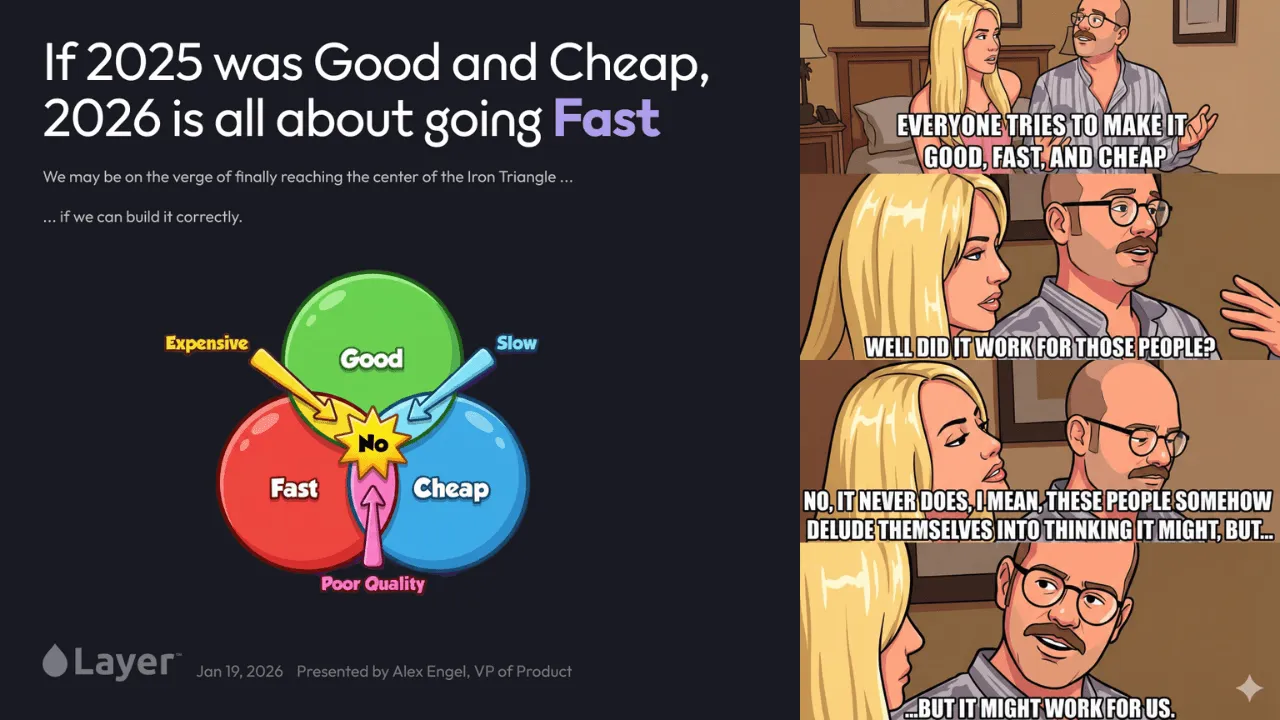
Alex Engel was quoted multiple times during and after PGC London, reinforcing the broader industry conversation around creative automation:
- Mentioned by Mike Kanarek from Mobile Game Doctor as the highlight
- Quoted by Álvaro Zorrilla on LinkedIn for showing creative generation is becoming workflow-based: faster, cheaper, and still consistent in style.
- Vincent Tessier mentioned Layer as their next tool to test
- Quoted by Matej Lancaric during his PGC talk on UA creatives following his 2026 Predictions
These conversations reflect a growing realization across the industry: AI-powered creative production systems are becoming foundational — not optional.
The Takeaway
PGC London 2026 made one thing very clear:
Studios aren’t constrained by ideas or ambition. They’re constrained by time, workflow friction, and production overhead.
Layer exists to remove those constraints so teams can finally test, learn, and scale creative at the pace modern UA demands. Explore our tools and features, or read our success stories to see how studios are already doing this. Shift away from thinking individual assets to building creative systems that scale.
More soon.
#TeamLayer