Character design is one of the most creatively demanding and time-intensive disciplines in game development. A single playable character can take weeks to move from initial sketches through final concept approval. Supporting characters, NPCs, and enemy rosters multiply that timeline across the entire production. Studios need more characters, more variety, and more iteration — and they need it faster.
Layer transforms character design from a slow, sequential process into a rapid exploration engine. Generate dozens of character concepts in minutes. Explore silhouettes, color palettes, costume variations, and style directions at a pace that manual sketching cannot match. Keep your character artists focused on creative decisions and final refinement while Layer handles the volume work that slows production.
Rapid Character Concepting at Scale
The early stages of character design are about exploration — testing ideas quickly to find directions worth pursuing. Traditional concepting limits you to however many sketches an artist can produce in a day.
Explore More Directions Simultaneously Generate 20-50 character silhouettes in minutes. Test radically different design directions — armored warriors, agile rogues, hulking tanks — without committing days to each concept.
Break Creative Blocks When a character design stalls, Layer generates unexpected combinations and visual ideas that spark new directions. Feed in loose references and discover approaches your team hadn't considered.
Demographic and Cultural Diversity Rapidly generate diverse character representations across body types, ethnicities, and cultural influences. Build inclusive rosters without extending timelines.
Stakeholder Alignment Present 30 concepts instead of 3 at your next review meeting. Get stakeholder buy-in faster by showing the full range of possibilities, not just the directions one artist had time to explore.
Layer turns character concepting from a bottleneck into the fastest phase of your pipeline.
Character Sheets and Production Assets
Once a character direction is approved, the production work begins — expression sheets, turnaround views, costume variants, and supporting documentation. This work is essential but repetitive, and it consumes senior artist time that could go toward creative direction.
Expression Sheets Generate full expression ranges — happy, angry, surprised, determined, exhausted — that maintain character consistency. Give your animation and narrative teams the reference they need.
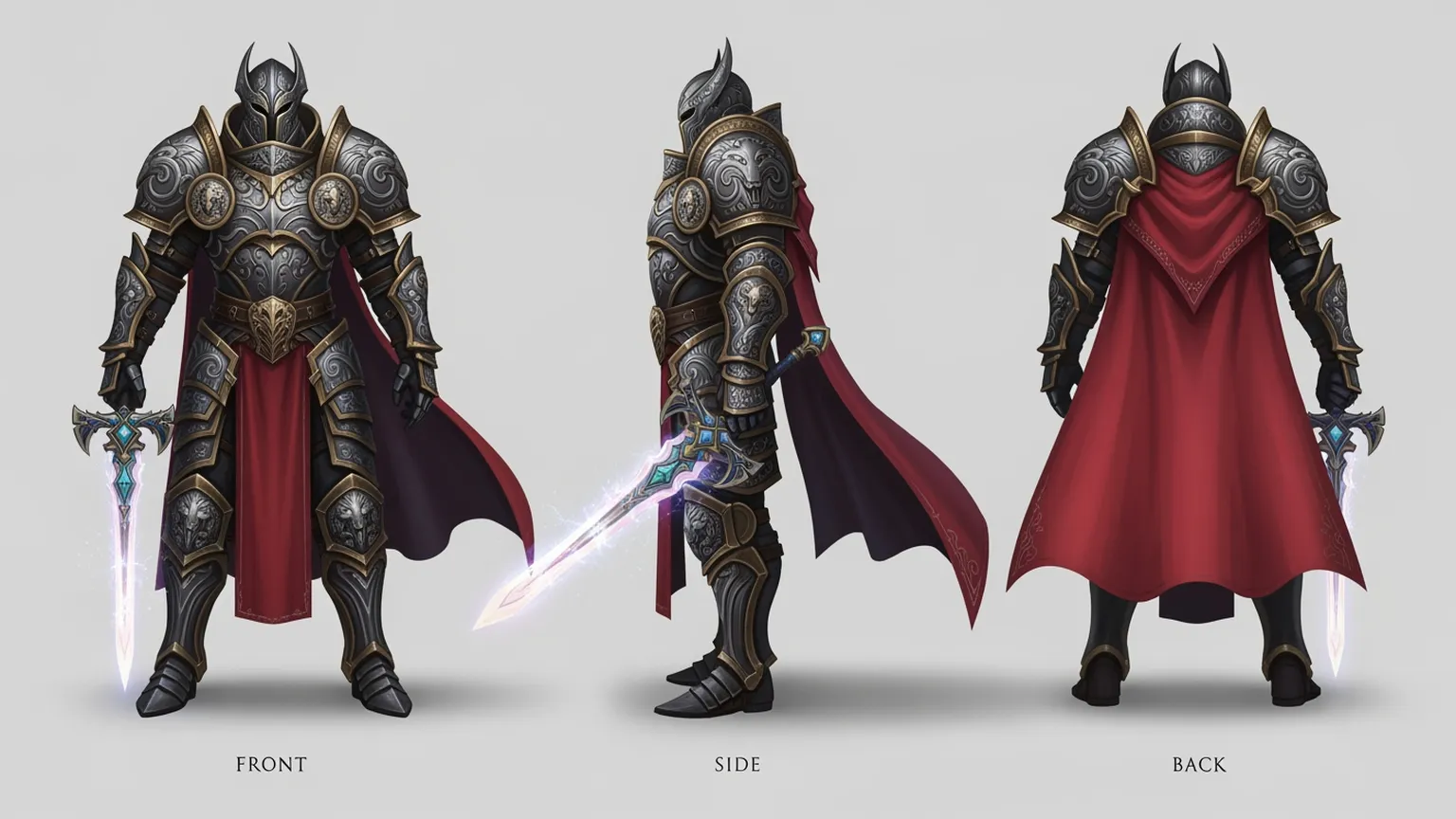
Turnaround Views Produce front, side, three-quarter, and back views of approved character designs. Modelers get clean reference without waiting weeks for manual turnarounds.
Costume and Equipment Variants Generate alternate outfits, armor sets, weapon loadouts, and seasonal skins. Explore monetization-ready cosmetic variations at scale.
Color Palette Exploration Test dozens of color combinations on a single character design. Find the palette that reads clearly in-game and differentiates the character from the rest of your roster.
Production-ready character assets that keep your pipeline moving.
Style-Consistent Character Rosters
Games need characters that look like they belong in the same world. Whether your art style is cel-shaded, realistic, pixel art, or painterly, every character must share a visual language. Maintaining that consistency across a large roster is one of the hardest challenges in character design.
Custom Style Training Train Layer on your game's existing character art. Every new character generation automatically respects your established proportions, rendering style, line weight, and color sensibility.
Art Direction Guardrails Set style parameters that ensure all generated characters fit within your game's visual identity. Art directors can define boundaries while still allowing creative exploration within those constraints.
Roster Cohesion Generate new characters alongside existing ones to verify visual cohesion. Test how a new hero reads next to your established cast before committing to a direction.
Cross-Team Consistency When multiple concept artists and game artists contribute to a roster, Layer's style training ensures visual consistency regardless of who is directing the generation.
Style consistency at roster scale, not just individual character scale.
NPC and Enemy Design at Volume
Hero characters get the spotlight, but most games need hundreds of NPCs, enemies, creatures, and background characters. These designs matter for world-building but rarely justify the same production investment as a protagonist.
Enemy Archetypes Generate visual variations across enemy types — foot soldiers, elites, minibosses, and bosses — with escalating visual complexity that telegraphs threat level.
NPC Populations Build diverse townspeople, merchants, quest-givers, and background characters that make your game world feel inhabited. Generate dozens of civilian designs that share cultural and stylistic cues.
Creature Design Explore creature concepts for fantasy, sci-fi, and horror settings. Generate biological, mechanical, and hybrid creature designs that feel original and fit your world's logic.
Faction Differentiation Design distinct visual identities for in-game factions — color coding, armor styles, insignia, and silhouette profiles that let players identify allegiance at a glance.
The volume of supporting character design that makes worlds feel real.
Integration with Production Pipelines
Character design does not end at the concept phase. Layer fits into the tools your team already uses, so generated concepts flow seamlessly into production.
PSD Export with Layers Export character concepts as layered PSD files. Artists refine hair, clothing, accessories, and body elements independently in Photoshop or Clip Studio Paint.
Adobe Creative Suite Layer integrates with Photoshop so character art moves directly into your team's Photoshop and Illustrator workflows without manual file juggling.
Unity and Unreal Engine Export finalized character reference directly into your engine project. Keep concept art organized alongside the 3D assets and animations it informs. Layer works with both Unity and Unreal Engine.
Figma for Design Systems Teams using Figma for game UI can pull character portraits and icons directly from Layer-generated assets into their design systems.
Seamless integration with the tools your character pipeline already depends on.
Enterprise-Ready for Studio Teams
Character design involves IP-sensitive work that demands enterprise security and collaborative workflows.
SOC 2 Compliance Layer is SOC 2 compliant. Your character IP, style training data, and generated concepts are protected by enterprise-grade security.
No Seat Fees Scale your creative team on Layer without per-seat licensing costs. Add concept artists, art directors, and producers to the platform as your team grows.
Approval Workflows Route generated character concepts through art director review and stakeholder approval before they enter production. Maintain creative quality control at any volume.
Shared Style Libraries Build team-wide libraries of approved character styles, reference boards, and generation presets. Ensure everyone on the team works from the same creative foundation.
Enterprise infrastructure for creative character design at studio scale.
From Concept to Final Character Faster
Layer accelerates the entire character design journey — from first sketch to approved concept to production-ready assets. Studios using Layer for character design report dramatically shorter concepting phases and more creative exploration per character.
The traditional character pipeline — weeks of sketching, rounds of revision, manual production of supporting assets — compresses into days. Your concept artists spend more time making creative decisions and less time producing volume. Your art directors review more options and make better-informed approvals. Your production pipeline stays fed with approved character concepts.
Explore related workflows like concept art for broader ideation, environment art for world-building alongside your characters, and texture generation for character surface materials.