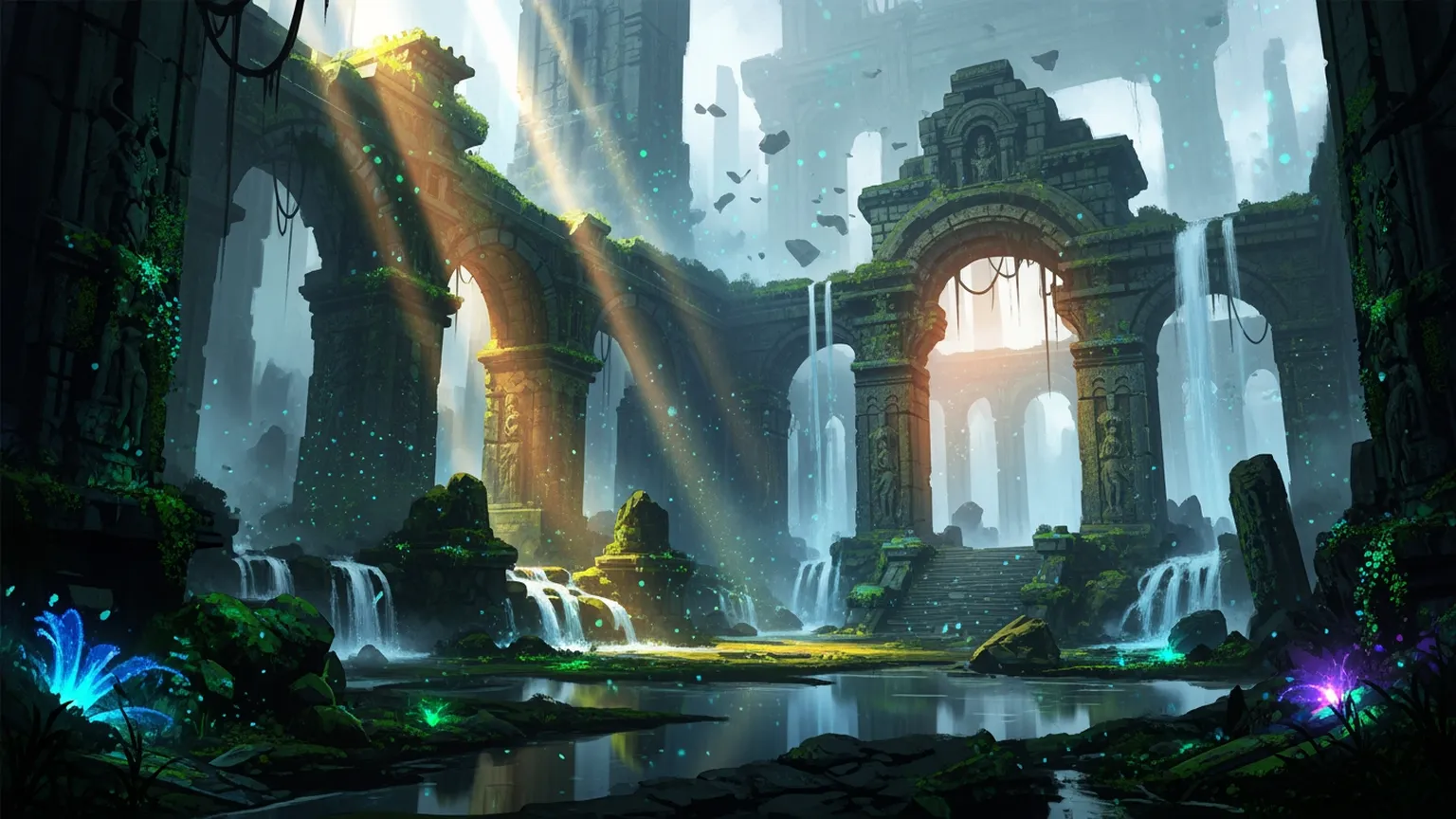
Concept art is the visual foundation of every game, film, and entertainment project. Before a single 3D model is built or a line of code is written, concept art defines what the final product will look like. But traditional concept art production is slow — a senior concept artist might produce 3-5 polished concepts per day, and pre-production schedules demand hundreds of concepts across characters, environments, props, vehicles, creatures, and UI.
Layer transforms concept art from a serial, time-constrained process into a parallel exploration engine. Generate dozens of concepts in minutes across any subject matter. Explore visual directions that would take weeks to sketch manually. Give your concept artists the power to be creative directors — selecting, refining, and combining ideas instead of spending all their time producing them.
Accelerated Visual Development
Pre-production visual development sets the creative direction for an entire project. The more visual directions a team can explore, the stronger their creative foundation. But exploration is expensive when every option requires hours of manual work.
Explore 10x More Directions Generate 50-100 concept variations in a single session. Where a concept artist might explore 3 directions for a hero vehicle, Layer lets you explore 30 — and find the unexpected direction that defines your game.
Cross-Domain Ideation Generate concepts that blend influences across genres, cultures, time periods, and art styles. Combine medieval architecture with bioluminescent alien technology. Mix Victorian fashion with cyberpunk utility. Creative combinations that emerge faster than manual exploration allows.
Visual Language Definition Establish your project's visual language in days, not months. Generate enough concepts to define color palettes, shape languages, material treatments, and atmospheric moods across your entire game world.
Narrative Visualization Turn written narrative descriptions into visual concepts. Game designers and writers communicate their vision through images, not just words, reducing interpretation gaps between disciplines.
Visual development at the speed your production schedule requires.
Concept Art for Every Discipline
Games need concept art across every visual domain — characters, environments, props, vehicles, creatures, UI, and marketing materials. Layer generates across all of them.
Character Concepts Heroes, villains, NPCs, creatures, and costumes. Explore silhouettes, proportions, costume details, and expression ranges. See character design for dedicated character workflows.
Environment Concepts Landscapes, interiors, cityscapes, dungeons, and alien worlds. Define the look and feel of every location in your game. See environment art for dedicated environment workflows.
Prop and Vehicle Design Weapons, tools, furniture, vehicles, ships, and mechanical devices. Generate prop concepts that fit your world's technology level and aesthetic.
Creature and Monster Design Biological, mechanical, magical, and hybrid creatures. Explore anatomy, silhouette, color, and threat-level variation across entire creature rosters.
UI and HUD Concepts Menu layouts, HUD elements, icon sets, and interface chrome. Visualize your game's UI before investing in implementation.
One platform for every concept art discipline your project needs.
Paintover and Refinement Workflows
AI-generated concept art is rarely the final output — it is the starting point for human refinement. Layer is designed for paintover workflows where artists build on generated foundations.
PSD Export with Layers Export concepts as layered PSD files for paintover in Photoshop, Clip Studio Paint, or Procreate. Separate elements for independent refinement.
Iterative Refinement Use a generated concept as a base, paint over it to adjust proportions or add detail, then feed the refined version back into Layer for further variation. Iterative human-AI collaboration that converges on the best result.
Composition Exploration Generate rough compositions quickly, then select the strongest for manual refinement. Spend painting time on the best ideas, not on exploring dead ends.
Detail Studies Generate close-up detail studies of specific elements — a sword hilt, a door mechanism, a creature's eye — to inform the final concept with precise detail reference.
A workflow built for concept artists who want to amplify their creative output, not replace their craft.
Style Training for Studio IP
Every studio has a visual identity. Layer's custom style training ensures that generated concept art respects your studio's established look from the first generation.
Encode Your Art Style Train Layer on your existing concept art. Whether your style is painterly, graphic, photorealistic, or hand-drawn, Layer learns your visual language and applies it to every generation.
Multiple Style Presets Maintain different style presets for different projects or different phases of a project — loose exploration style for early ideation, polished presentation style for stakeholder reviews.
Art Direction Control Art directors and creative directors define style boundaries that guide every generation. Enable creative exploration within controlled brand parameters.
Consistent Team Output When multiple concept artists and game artists use the same style training, the entire team's output shares a visual coherence that strengthens the project's identity.
Your style, applied consistently at any production scale.
Cross-Team Communication
Concept art is a communication tool. It bridges the gap between design intent and production execution. Layer makes visual communication accessible to everyone on the team, not just artists.
Designer-to-Artist Communication Game designers generate rough visual concepts to communicate ideas to the art team. "Something like this, but more aggressive" is more useful with an image attached.
Stakeholder Presentations Present visual concepts to executives, publishers, and investors using polished AI-generated art. Get buy-in on creative direction before committing production resources.
Cross-Discipline Alignment Narrative designers, audio designers, level designers, and programmers all benefit from seeing visual concepts early. Layer makes it feasible to produce concept art for every aspect of the game, not just the hero moments.
Remote Team Collaboration Distributed teams share visual concepts through Layer's platform. Comment, iterate, and approve concepts without being in the same room.
Visual communication for the entire team, not just the art department.
Enterprise-Ready Concept Art Production
Professional concept art production requires IP security, organized workflows, and scalable access.
SOC 2 Compliance Your concept art, style training data, and creative direction are protected by enterprise-grade security. Layer is SOC 2 compliant.
No Seat Fees Give every team member access to concept art generation without per-seat costs. From concept artists to producers to marketing managers — anyone who needs to communicate visually.
300+ AI Models Access over 300 specialized AI models for image, video, 3D, and audio generation. Choose the right model for each concept art task — photorealistic rendering, stylized illustration, sketch generation, and more.
Approval and Review Workflows Route generated concepts through structured review processes. Art directors approve, annotate, and direct revisions within the platform.
Enterprise infrastructure for creative pre-production at any scale.
From Blank Page to Creative Direction
Layer eliminates the blank-page problem that slows the start of every project. Instead of staring at an empty canvas, teams start with dozens of AI-generated possibilities and navigate toward the best creative direction through selection and refinement.
The traditional concept art process — weeks of sketching, revisions, and stakeholder alignment — compresses into days. Your team explores more ideas, aligns faster, and enters production with a stronger visual foundation.
Explore related workflows like character design for character-specific concepting, environment art for world visual development, storyboarding for narrative visualization, and brand assets for marketing visual development.