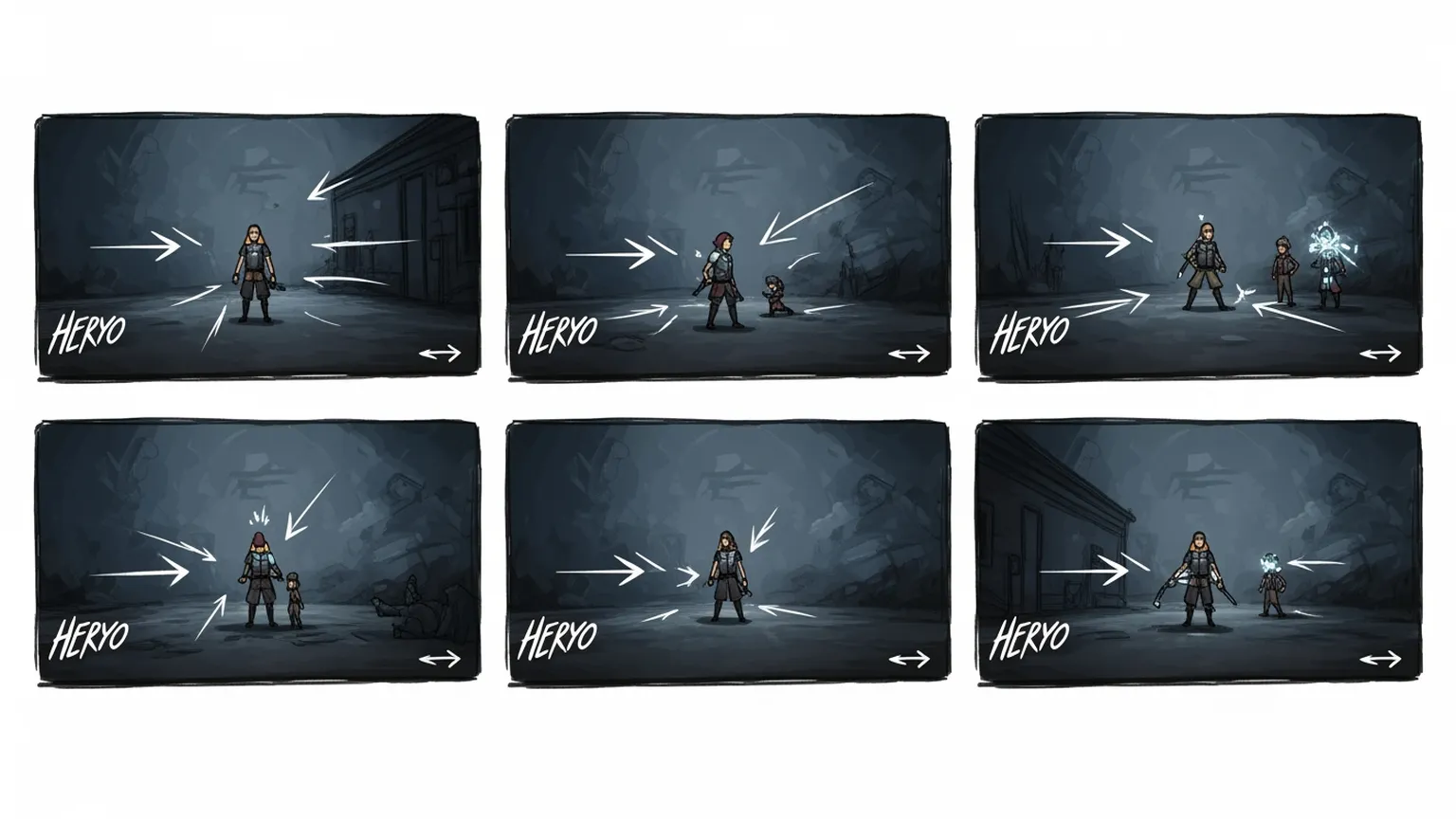
Storyboarding is how creative teams plan visual narratives — game cinematics, cutscenes, trailers, commercials, animated sequences, and gameplay moments. Every frame communicates camera angle, character staging, lighting mood, and narrative beat. But traditional storyboarding is slow. A storyboard artist might produce 10-20 polished frames per day, and a single game cinematic can require hundreds of frames across multiple revision passes.
Layer transforms storyboarding from a sequential bottleneck into a rapid visualization pipeline. Generate dozens of storyboard frames in a single session. Explore camera angles, compositions, lighting moods, and character staging at a pace that hand-drawing cannot match. Directors and narrative designers communicate their vision through images instead of descriptions, aligning entire teams around a shared visual plan.
Rapid Scene Visualization
The first step in storyboarding is translating a written narrative into visual frames. This translation is where miscommunication between writers, directors, and artists most often occurs. Layer closes the gap by making visualization immediate.
Script-to-Visual Translation Turn scene descriptions into visual frames in seconds. "Interior, abandoned lab, dim blue emergency lighting, protagonist enters from frame left" becomes an actual image that the entire team can discuss and refine.
Camera Angle Exploration Generate the same narrative moment from multiple camera angles — wide establishing shot, medium two-shot, close-up, over-the-shoulder, bird's eye, low angle. Find the composition that best serves the story.
Lighting and Mood Studies Explore how different lighting treatments change the emotional tone of a scene. The same composition rendered in warm sunset light, cold fluorescent glare, or dramatic chiaroscuro tells three different stories.
Staging Variations Test character positioning, prop placement, and spatial relationships within a scene. Where characters stand relative to each other communicates power dynamics, intimacy, and tension.
Visual planning that moves as fast as creative discussion.
Game Cinematic Storyboarding
Game cinematics — cutscenes, in-engine sequences, and real-time narrative moments — require extensive pre-visualization. Directors need to plan every shot before investing in animation, voice recording, and engine implementation.
Cutscene Planning Storyboard entire cutscenes frame by frame. Plan camera movements, character performances, and timing before any animation work begins. Identify narrative pacing issues early, not after animation is complete.
In-Engine Sequence Pre-Viz Visualize real-time narrative sequences — scripted gameplay moments, environmental storytelling beats, and interactive cinematics — with storyboard frames that reference actual game environments and characters.
Trailer Storyboarding Plan game trailers shot by shot. Generate frames that establish pacing, highlight features, and build to a call-to-action. Align marketing and development teams on the trailer vision before production begins.
Branching Narrative Visualization Games with branching narratives need storyboards for multiple paths. Layer generates frames for alternate story branches, helping narrative designers visualize player choice consequences.
Cinematic pre-production that respects game development constraints and timelines.
Character Consistency Across Sequences
Storyboards must maintain character recognition across every frame. A character must look like the same person whether seen in close-up or wide shot, lit by sunlight or flashlight, shown from the front or behind.
Character Reference Locking Establish a character's visual appearance and lock it as a reference for all subsequent frames. Layer maintains consistent facial features, body proportions, clothing details, and color palette across the entire sequence.
Expression and Performance Generate the same character across a range of emotions and actions — speaking, fighting, reacting, thinking — while maintaining visual consistency. Give your animation team clear performance reference.
Multi-Character Scenes Maintain distinct visual identities for multiple characters in the same frame. When three characters share a scene, each remains recognizable and differentiated.
Costume and State Changes When a character changes costume, gets injured, or ages within the narrative, Layer generates the transition frames that connect their visual states.
Character consistency that holds across entire sequences, not just individual frames. Work with your concept artists to establish character references that carry through storyboarding.
Collaborative Narrative Development
Storyboarding is inherently collaborative. Directors, writers, game designers, cinematographers, and art directors all contribute to the visual narrative. Layer makes this collaboration visual rather than verbal.
Director Vision Communication Directors generate frames that show exactly what they envision. No more relying on verbal descriptions that each team member interprets differently.
Writer-Director Alignment Narrative designers and creative directors review storyboard frames together, identifying moments where the visual interpretation diverges from the written intent. Catch misalignment before production.
Art Director Feedback Art directors annotate generated frames with style notes, composition adjustments, and lighting direction. The storyboard becomes a living document that captures creative decisions.
Cross-Discipline Review Audio designers see what emotional tone a scene targets. Level designers understand the spatial requirements of a cinematic. Animators preview the performances they need to create. Everyone works from the same visual plan.
Storyboarding as a collaboration tool, not just an art production task.
Advertising and Marketing Storyboards
Storyboarding is not limited to entertainment production. Advertising agencies, marketing teams, and brand managers use storyboards to plan commercials, social campaigns, and brand videos.
Commercial Storyboarding Plan TV and digital commercials frame by frame. Present to clients with visual storyboards instead of written scripts. Get creative buy-in faster.
Social Media Video Planning Storyboard TikTok, Reels, and YouTube Shorts content before production. Visualize the hook, narrative arc, and call-to-action in frame format.
Campaign Narrative Arcs Plan multi-part campaign stories across sequential social posts, email series, or video chapters. Ensure the visual narrative builds cohesively across touchpoints.
Pitch and Presentation Visuals Use storyboard frames in pitch decks to sell creative concepts. Clients and stakeholders respond to visual narratives more strongly than written treatments. Marketing teams and creative strategists present with confidence.
Storyboarding for every visual narrative, not just film and games.
Enterprise Storyboard Production
Professional storyboard production requires IP security, collaborative tools, and efficient workflows.
SOC 2 Compliance Your narrative content, character designs, story IP, and storyboard frames are protected by enterprise-grade security. Layer is SOC 2 compliant.
No Seat Fees Directors, writers, artists, producers, and stakeholders all access the storyboarding workflow without per-seat costs. Collaboration scales with your team, not your tool budget.
PSD and Multi-Format Export Export storyboard frames as PSD (for paintover and refinement), PNG, or WebP. Import into your animatic tools, editing software, or presentation decks. Layer integrates with Photoshop workflows for professional post-production.
300+ AI Models Access specialized models for different visual styles — photorealistic scene visualization, stylized illustration, sketch-style storyboarding, and more. Choose the rendering approach that matches your production needs.
Enterprise infrastructure for visual narrative planning at any scale.
From Script to Visual Plan in Hours
Layer compresses storyboard production from weeks to hours. Directors and narrative teams visualize entire sequences in a single session, iterate on compositions and staging in real time, and enter production with a comprehensive visual plan.
The traditional storyboarding process — days of sketching per sequence, multiple revision passes, manual consistency checking — becomes a rapid creative conversation. Your team spends time on narrative decisions, not production labor.
Explore related workflows like concept art for visual development, character design for establishing character references, and social media content for planning social video narratives.