The New Layer Is Here: Why We Rebuilt Creative Production From the Ground Up

For the past several months, we've been rebuilding Layer. Not a redesign, a rethink.
If you've used Layer to ship UA creative, LiveOps content, or on-brand game art, you know the old workflow well: pick a model, configure a workflow, manage outputs, repeat. It worked, and hundreds of studios used it to move faster than agencies or manual production ever allowed. But it still asked creative and growth teams to operate the tool. Every asset meant navigating panels, switching between models, and manually keeping everything on-brand.
The new Layer changes that relationship. Instead of a tool you operate, Layer is now an agent you direct.
Why we rebuilt it
Marketing and UA teams spend the majority of their creative time on repetitive variation work: resizing, reformatting, restyling the same asset for a dozen channels and audiences. That work is necessary, but it isn't where creative judgment adds value. It's where speed does.
We built the new Layer around a simple idea: describe what you need, and let the agent handle research, ideation, model selection, and generation, so your team can spend its time on direction and quality control instead of production mechanics.
This isn't a pivot away from what Layer does well. It's the same platform, the same workspace, the same data and security you already trust, built around a faster way to work.
What's new
A creative agent, not just a generation tool
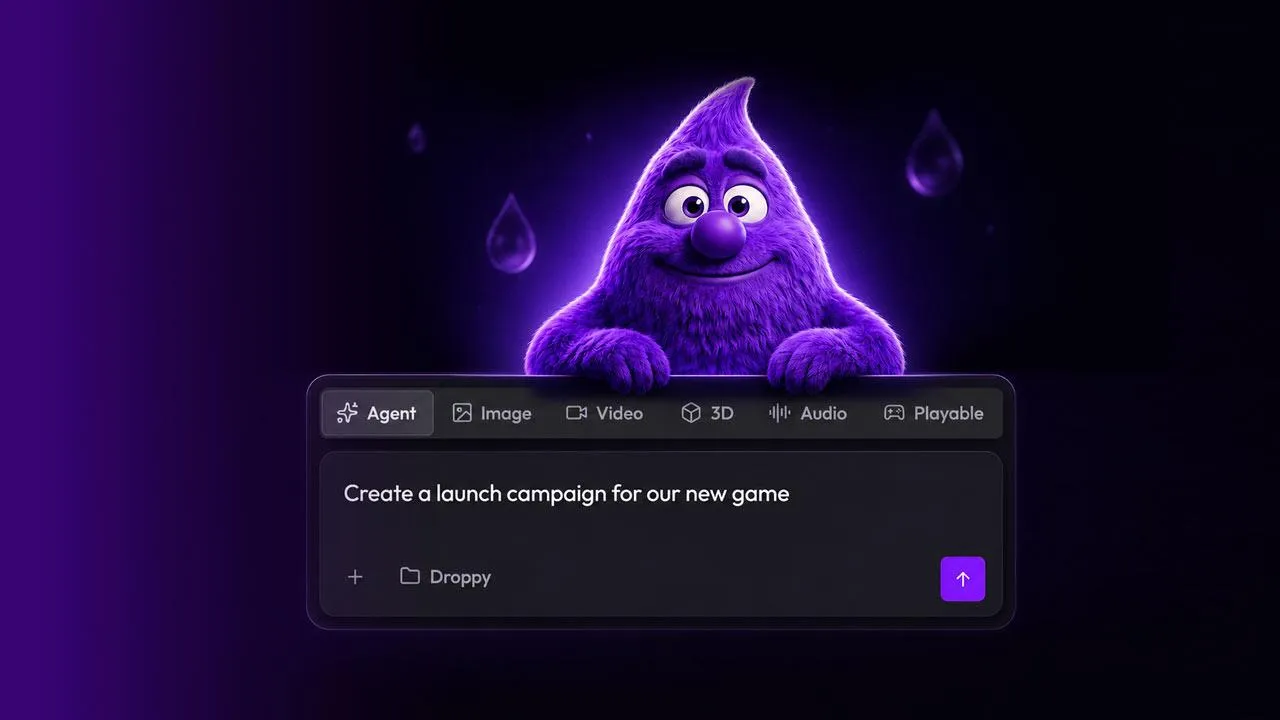
Give your agent a full brief and it researches trends, ideates concepts, selects the best model for the job, and generates the assets, all within a single conversation. You're no longer switching between models to figure out which one fits the job. The agent does that reasoning for you, and shows its reasoning as it works, so you can course-correct before assets are generated rather than after.
One infinite board
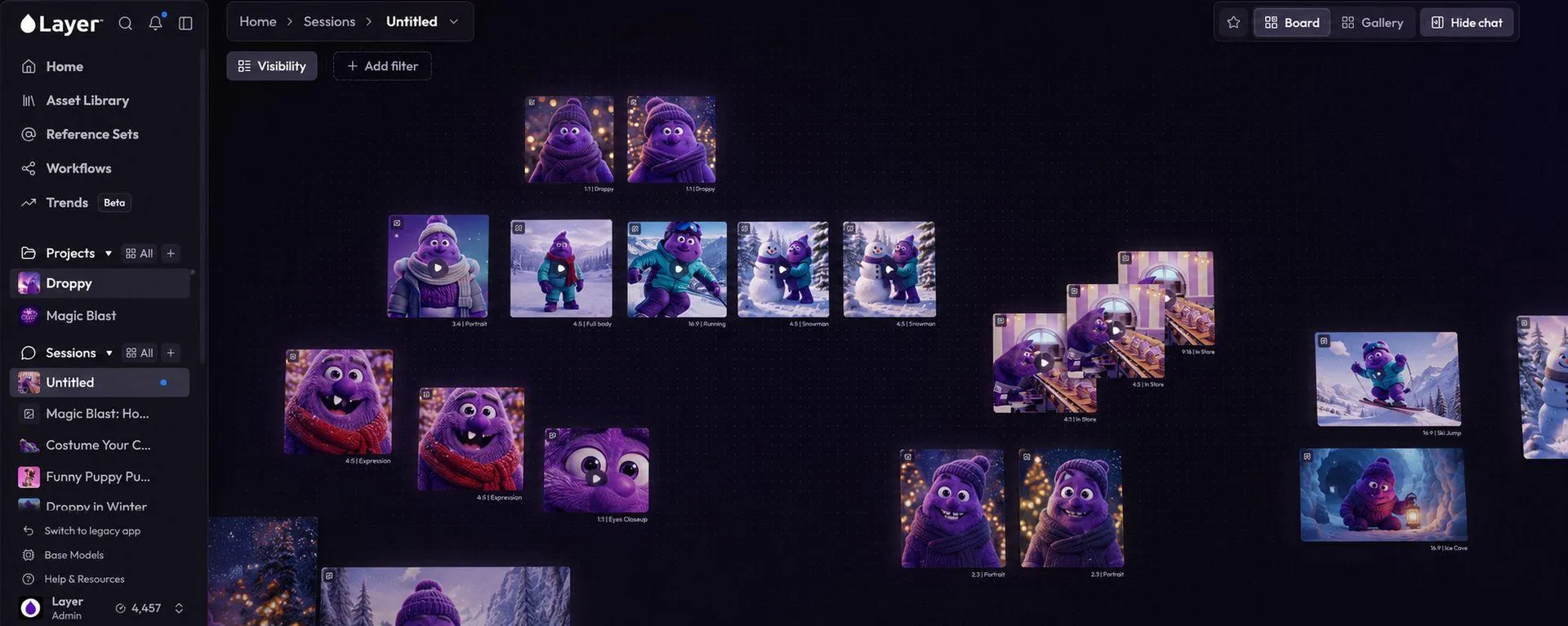
Every asset, reference, and iteration now lives on a single board instead of scattered across separate views. You can organize spatially, group related outputs, add notes, and keep working with your agent directly on the canvas. For teams managing dozens of campaign variants at once, this alone removes a meaningful amount of the busywork that used to sit between a brief and a finished asset.
Reference Sets
Reference Sets let you teach Layer your world once: your characters, your brand palette, your established art style, your product's tone of voice. From there, every generation draws on that context automatically. You can fine-tune further with custom LoRAs and voice cloning, so IP consistency isn't something your team has to police manually on every asset.
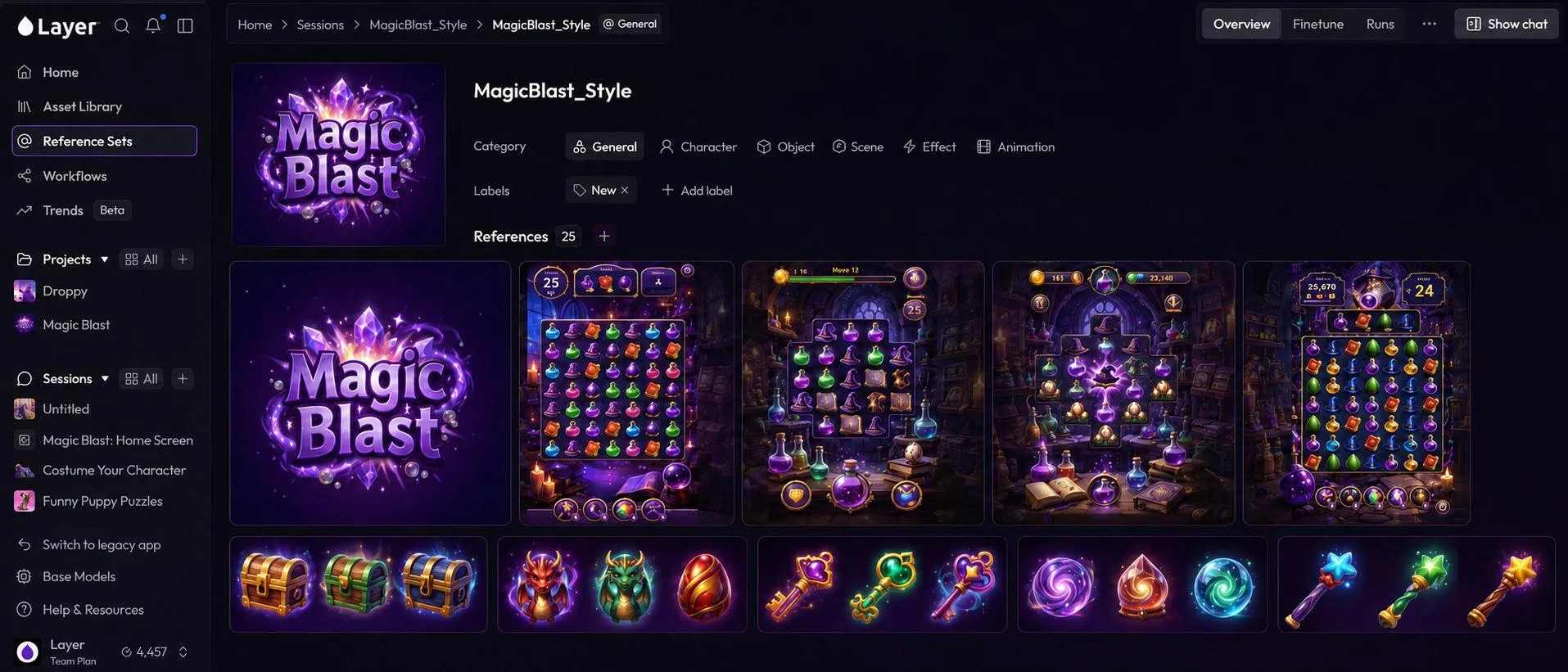
Projects
Projects give your agent standing instructions and assets so it reliably produces what you want, every time, without re-explaining your brief in every session. Set your game's style, tone, do's and don'ts once, and every session in that project inherits them.
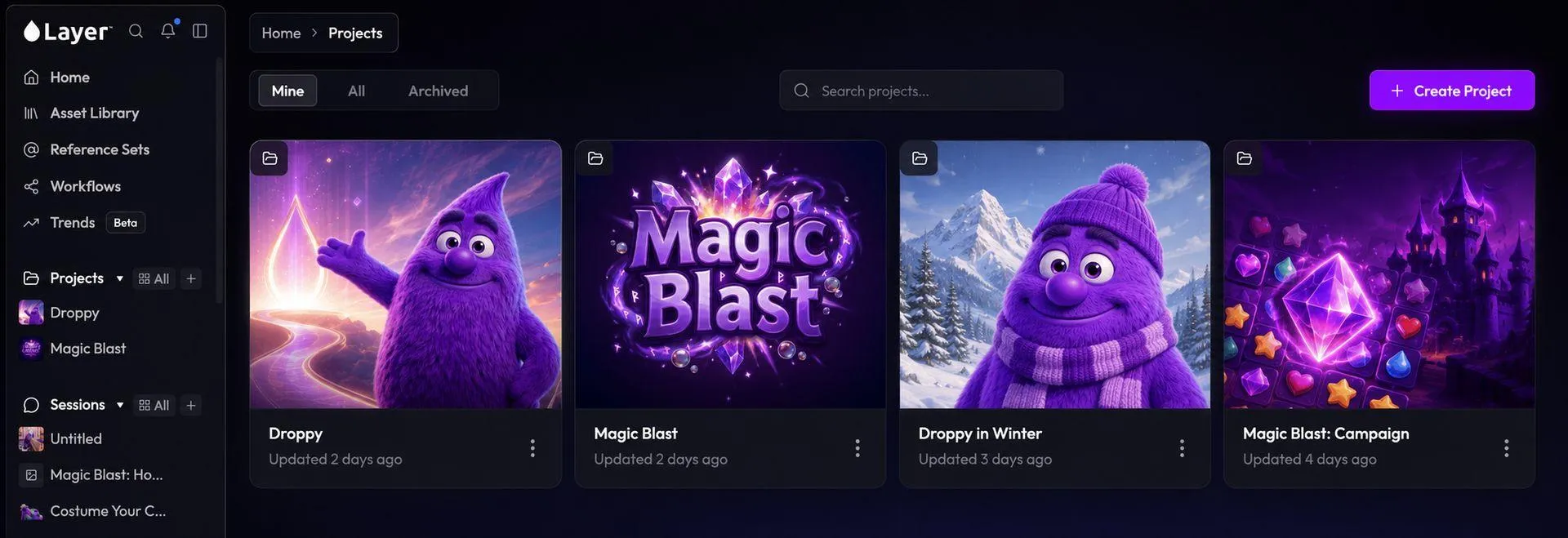
Connectors
Layer now connects directly to AppLovin, Meta, Google, TikTok, Google Drive, and more, so your agent can pull context and push finished creative into the channels where your campaigns actually run.
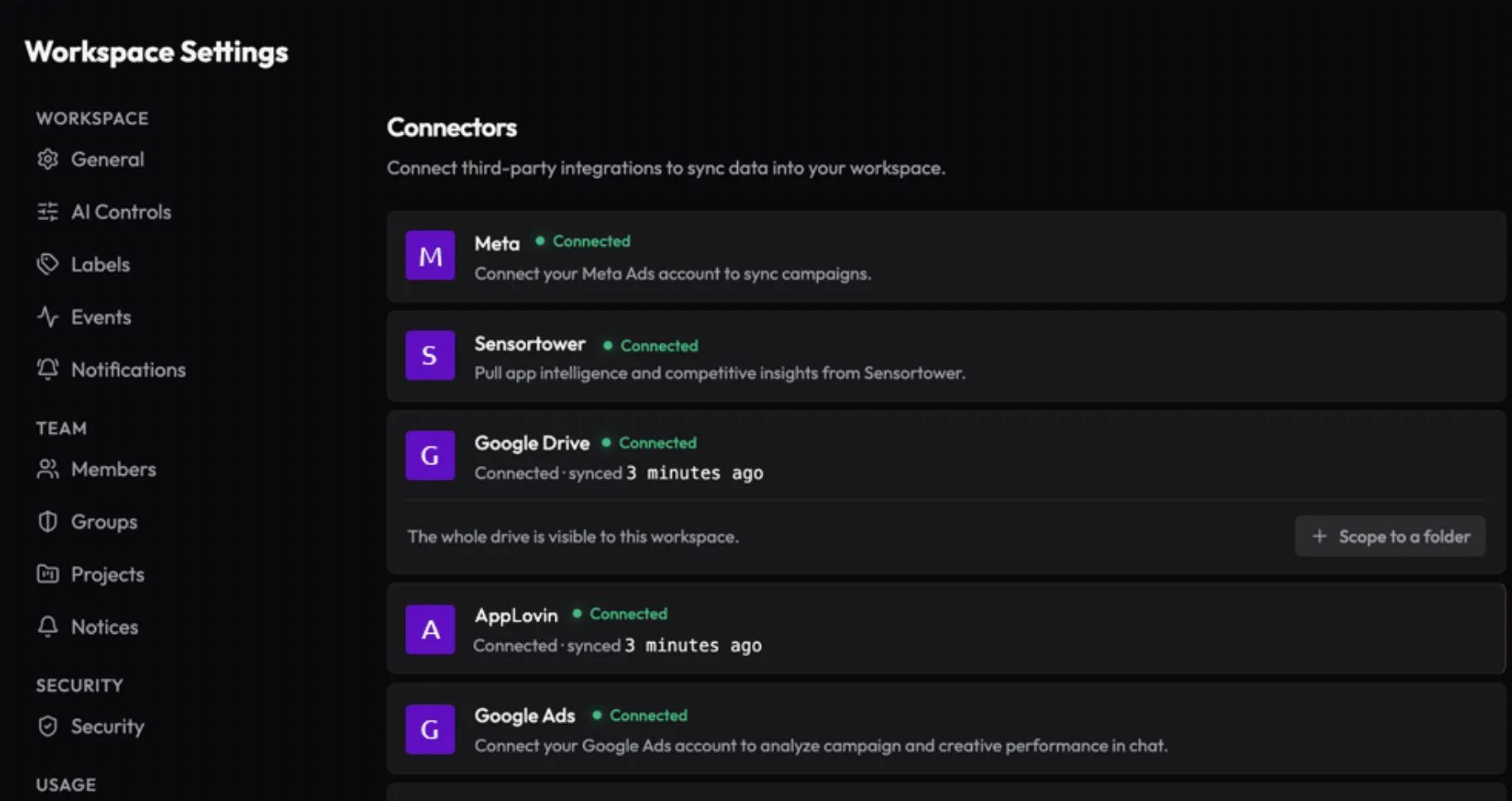
Memory
The agent remembers your preferences and how your team likes to work, and it gets better with every session. The more you use Layer, the less you have to explain.
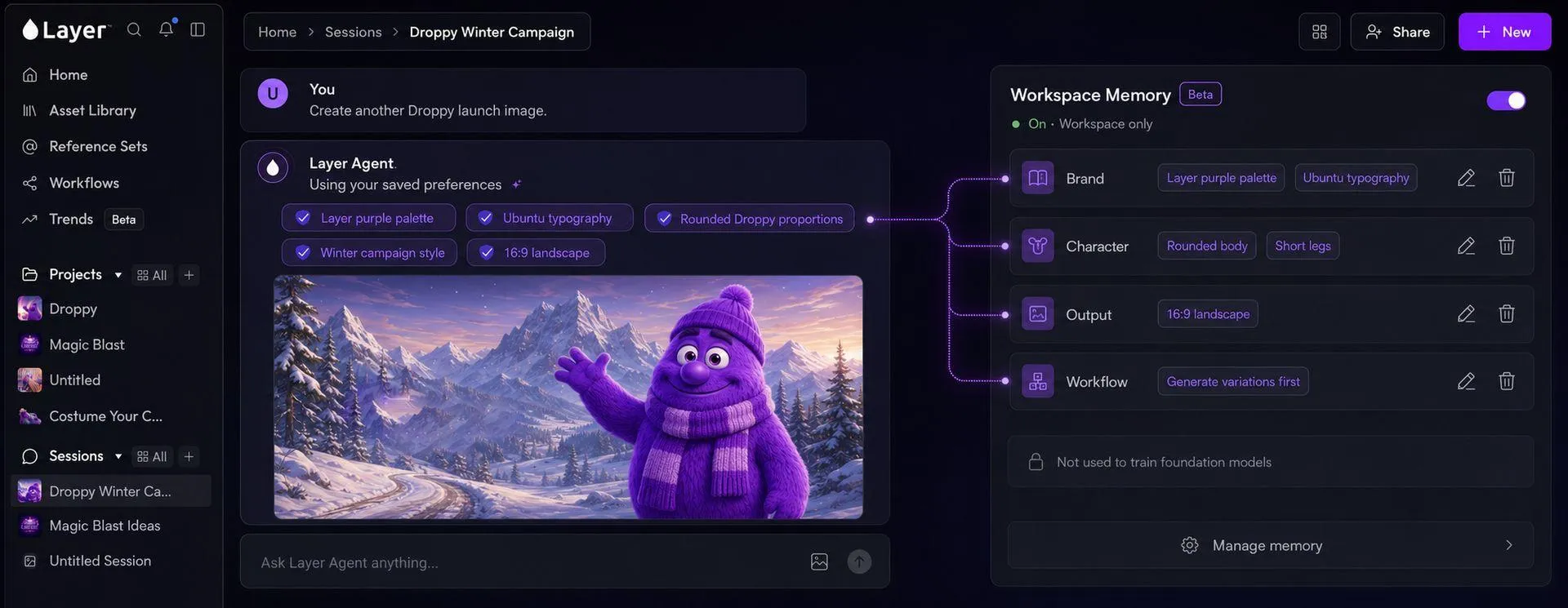
Model access, unchanged
Everything above still runs on the same model-agnostic foundation Layer has always offered: access to hundreds of the latest image, video, audio, and 3D models in one place, with new models added as soon as they're available. You can browse the full library at layer.ai/models.
One platform for the entire creative pipeline
This update is also what makes Layer a genuine one-stop shop for game and entertainment creative, rather than a tool for one part of the pipeline. UA teams can go from a brief to a full set of channel-ready ad variants. LiveOps teams can generate on-brand seasonal content without waiting on an art department. Studios producing broader IP content, from character art to marketing assets, get a single system that already knows their brand instead of relearning it with every request.
That's the practical difference: less time spent re-briefing tools and stitching outputs together, more time spent shipping creative that's already on-brand and ready to test.

Thank you
This launch is the product of months of work from our engineering team rebuilding the infrastructure underneath it, our design team figuring out how to make an agent feel like a creative partner instead of a black box, and everyone who tested and broke and rebuilt this until it held up. It's also the product of feedback from the studios who've been using Layer all along. A lot of what shipped here started as a note from one of you.
Thanks for building this with us. Let's get to work!
#TeamLayer 🚀